We Did a Thing...
And its Episode ONE of our Podcast - The Raw Onion (and why we were compelled to take the leap)

Why We All Want to Be Heard: The Neuroscience Behind Storytelling, Stress, Podcasting, and the “Corporate Family” Myth
Corresponding to Episode 1 of The Raw Onion
There’s a reason so many of us feel an almost magnetic pull to speak, write, record, or create something that says: Here’s what I see. Here’s what I’ve lived. Here’s what’s true for me.
It isn’t narcissism.
It isn’t noise.
And it isn’t just the digital age getting to our heads.
It’s neuroscience.
The Brain on Story
Humans are wired to connect through storytelling. When we tell our stories—or even when we simply feel heard—the brain rewards us with a cocktail of dopamine and oxytocin. These chemicals dampen stress responses and strengthen our sense of belonging. Being listened to literally calms the nervous system.
The opposite is also true: chronic dismissal, invalidation, or feeling invisible activates the same threat circuitry we see in physical danger.
In other words, not being heard feels unsafe.
This is part of why so many people today feel a need to start podcasts, write newsletters, open group chats, or carve out digital spaces of their own. In a world where traditional community structures have eroded—and workplaces often pretend to provide it—our brains are scrambling for somewhere to land.
When Corporations Say “We’re a Family”
In our first episode of The Raw Onion, we unpeeled one of the most common psychological tricks in modern workplaces: the corporate “family.”
Here’s the thing: calling employees “family” feels warm and supportive on the surface, but neurologically it primes us to:
blur boundaries
overextend
tolerate treatment we’d challenge anywhere else
attach our sense of worth to performance or loyalty
“Family” language activates attachment systems in the brain. It shifts us from professional mode into belonging mode, and belonging mode is deeply tied to survival instincts. From an evolutionary standpoint, losing your “tribe” was once literally life-threatening. That wiring hasn’t changed.
So when a company implies, If you’re committed, you’ll go above and beyond, our brains often comply—automatically.
Especially during the holidays.
The Season of Soft Boundaries
This time of year is full of expectations—real, imagined, or inherited:
Show up to every gathering
Say yes to every request
Be the “team player”
Don’t let anyone down
But when your nervous system is already stretched thin, these obligations—personal or professional—can send you into the familiar loop of burnout: people-pleasing → shame → exhaustion → repeat.
Understanding your brain’s wiring is not about blaming yourself.
It’s about reclaiming your agency.
So What Does It Mean to Not Get Taken Advantage of This Holiday Season?
A few things, but number one is… Give yourself a 20 minute recess and listen to our brand new podcast which will explain it all AND give you a 72 hour brain hack to get your brain off autopilot obligation mode and tune into what is really important for YOU.
Your story, my story, anyones story isn’t self-indulgent; it’s stabilizing. Whether it’s a podcast, a Substack post like this, or a quiet conversation with one trusted person—speaking helps the brain integrate experience and release stored stress.
Why We Started The Raw Onion
We launched this podcast not because the world “needs another one,” but because we need to be heard—and we suspect you do too. We want to unpack how neuroscience shapes the way we work, love, coll
apse, rebuild, and repeat… and why understanding your wiring is often the first step to changing your life.
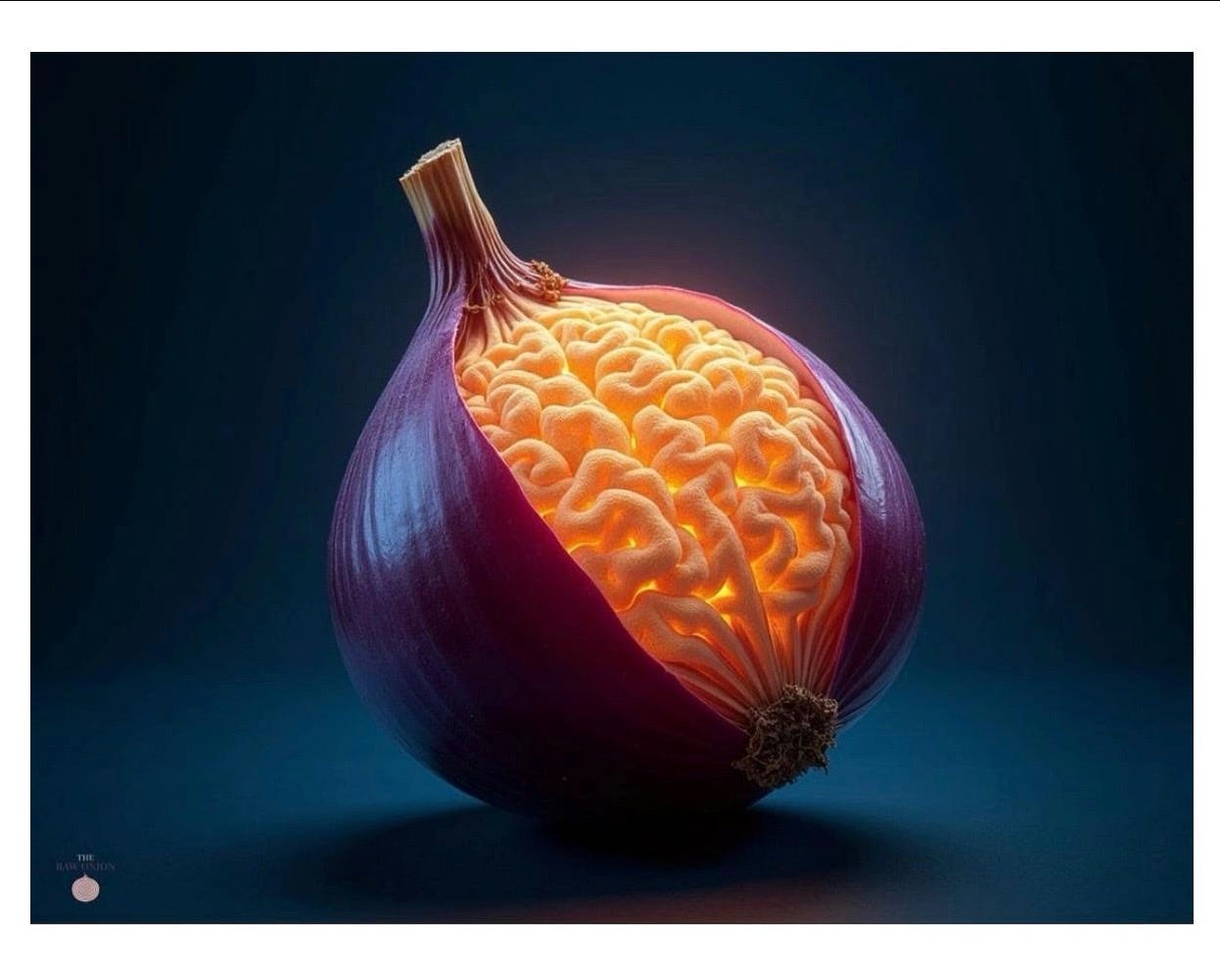
If this resonates with you, welcome.
There’s so much more to peel back.
LISTEN HERE: The Raw Onion Podcast
The "corporate family" thing is real. I've watched organizations use belonging language to extract more work, then act surprised when people finally set boundaries.